Respuesta corta: Los recubrimientos de protección anticorrosiva se dividen en tres familias. Los recubrimientos metálicos, como el galvanizado en caliente y la proyección térmica, añaden una capa de metal de sacrificio o de barrera; los recubrimientos orgánicos, como las pinturas epoxi y de poliuretano, forman una película de ligante, pigmentos y cargas; las capas de conversión, como el fosfatado, el cromatado y el anodizado, transforman químicamente la superficie del sustrato. Todos ellos dependen de una correcta preparación de superficies.
La protección anticorrosiva rara vez es una sola capa de pintura. En la práctica es un conjunto de capas diseñadas, cada una con una función concreta. Este artículo explica las tres familias de recubrimientos de protección anticorrosiva, qué contiene una imprimación, qué preparación de superficies necesita cada familia y por qué la superficie subyacente debe estar en buen estado antes de aplicar cualquiera de ellas.
Tres familias de protección
La mayoría de los sistemas de protección anticorrosiva pertenecen a una de tres familias. Los recubrimientos metálicos colocan sobre el sustrato una capa de sacrificio o de barrera de otro metal: aquí se incluyen el galvanizado en caliente, la proyección térmica (de metales), los recubrimientos electrolíticos y las capas depositadas en fase vapor. Los recubrimientos orgánicos son pinturas, esmaltes y revestimientos: un ligante que transporta pigmentos y cargas y que cura formando una película continua. Las capas de conversión transforman químicamente una fina capa superficial del propio sustrato en una superficie más resistente a la corrosión y con mejor adherencia. El fosfatado (fosfato de hierro o de zinc), el cromatado (cromato amarillo o verde) y el anodizado (oxidación electroquímica, habitual en aluminio y titanio) son las vías principales. Para los mecanismos subyacentes, consulte nuestra guía sobre qué es la corrosión y cómo prevenirla.
Los recubrimientos metálicos en la práctica
Galvanizado en caliente
En el galvanizado en caliente, el acero fabricado se sumerge en zinc fundido a unos 435–455 °C, formando capas de aleación zinc-hierro unidas metalúrgicamente al acero. El zinc protege de dos maneras: como barrera y por sacrificio, corroyéndose preferentemente frente al acero expuesto en arañazos y bordes cortados. La preparación de superficies forma parte del propio proceso: el acero se desengrasa, se decapa con ácido para eliminar la calamina y el óxido y se trata con fundente, porque el zinc no reacciona con una superficie de acero sucia. Encontrará más información en nuestro artículo sobre el acero galvanizado.
Proyección térmica (metalizado)
El zinc, el aluminio o el zinc-aluminio proyectados térmicamente se aplican en obra o en taller fundiendo alambre o polvo y proyectándolo sobre el acero. A diferencia del galvanizado, la unión es mecánica, por lo que el recubrimiento depende en gran medida de la superficie: las directrices de AMPP exigen acero libre de aceite y grasa (SSPC-SP 1) y limpiado mediante chorreado abrasivo, normalmente a SSPC-SP 10/NACE No. 2 para servicio atmosférico y a SSPC-SP 5/NACE No. 1 para inmersión, con un perfil agudo y angular de unos 65–125 µm (2,5–5,0 mil). La investigación sobre alternativas continúa; un estudio de 2019 analizó el Bristle Blasting como preparación del sustrato para la proyección térmica, pero es la especificación aplicable la que decide qué métodos son aceptables.
Imprimaciones ricas en zinc
Las imprimaciones ricas en zinc se sitúan entre las familias metálica y orgánica: un alto contenido de polvo de zinc en un ligante orgánico (epoxi) o inorgánico (silicato) proporciona protección galvánica a partir de una película de pintura. Nuestro artículo sobre la corrosión galvánica y las imprimaciones ricas en zinc explica cómo funciona esa acción de sacrificio y por qué necesita acero limpio y con perfil para establecer contacto eléctrico.
Qué contiene realmente una imprimación
Una imprimación no es un único ingrediente. Se compone de ligante, pigmentos y cargas que actúan conjuntamente, a menudo sobre una capa de conversión o metálica que aporta parte del rendimiento a largo plazo. Cada componente tiene una función:
- Ligante (por ejemplo epoxi, poliuretano, alquídico o silicato): mantiene unida la película y proporciona adherencia al sustrato.
- Pigmentos: aportan la función inhibidora de la corrosión o de barrera. El polvo de zinc protege por sacrificio, los pigmentos inhibidores como el fosfato de zinc ralentizan la reacción de corrosión, y los pigmentos laminares como el óxido de hierro micáceo o las escamas de aluminio alargan el recorrido del agua y el oxígeno.
- Cargas (extendedores): controlan el espesor de película, el coste y las propiedades mecánicas.
- Disolventes o agua: permiten la aplicación y después se evaporan. No aportan nada a la protección.
Para una guía práctica de las químicas de ligantes, consulte tipos genéricos de recubrimientos protectores.
Las capas de conversión y la cuestión de los cromatos
Las capas de conversión son finas, por lo que se utilizan sobre todo como pretratamiento que mejora la adherencia y la resistencia a la corrosión bajo película de una pintura o un recubrimiento en polvo posterior, y no como protección independiente en entornos severos. El fosfatado es habitual en el acero antes de pintar o aplicar recubrimiento en polvo; el anodizado es la vía estándar en el aluminio.
El cromatado ha estado sometido a presión normativa porque se basa en cromo hexavalente. En la UE, el trióxido de cromo y varios cromatos y dicromatos utilizados en estos procesos se incluyeron en el anexo XIV de REACH con fecha de expiración el 21 de septiembre de 2017, por lo que solo pueden utilizarse con una autorización. Muchos usuarios han pasado a alternativas trivalentes o sin cromo. Los activos más antiguos, sobre todo en el sector aeroespacial y ferroviario, todavía tienen recubrimientos con cromatos, y su eliminación exige control del polvo y equipos de protección; consulte nuestra página sobre la eliminación segura de recubrimientos con cromo VI.
Preparación de superficies según la familia de protección
| Familia de protección | Preparación de superficies típica | Notas |
|---|---|---|
| Galvanizado en caliente | Desengrase, decapado ácido y tratamiento con fundente en la planta de galvanizado | Las zonas sin recubrir se ven inmediatamente al sacar la pieza del baño |
| Proyección térmica (zinc, aluminio) | SSPC-SP 1 y después chorreado abrasivo a SSPC-SP 10 (atmosférico) o SSPC-SP 5 (inmersión) | Perfil agudo y angular de unos 65–125 µm (2,5–5,0 mil) |
| Recubrimientos orgánicos (alto rendimiento) | Según la ficha técnica del producto, habitualmente ISO 8501-1 Sa 2½ / SSPC-SP 10 con un perfil especificado | Los recubrimientos de mantenimiento tolerantes a la superficie pueden aceptar St 3 o SSPC-SP 11 |
| Capas de conversión | Limpieza química y desengrase en la línea de tratamiento | Según el sustrato: fosfatado en acero, anodizado en aluminio |
Por qué el sustrato siempre va primero
Ninguno de estos sistemas, ya sea metálico, orgánico o de conversión, rendirá más que la superficie sobre la que se aplica. La contaminación, la calamina, la corrosión existente o un perfil de anclaje insuficiente socavarán una capa de conversión de cromato con la misma facilidad que un epoxi bicomponente. Por eso una buena especificación de recubrimiento empieza con una norma de preparación de superficies (normalmente ISO 8501-1 o SSPC/AMPP), no con el propio recubrimiento.
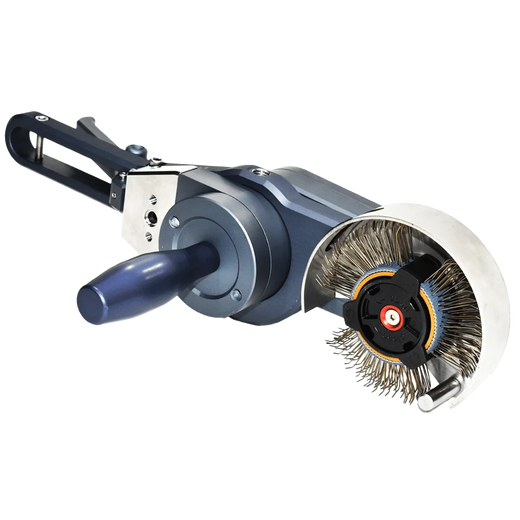
Para el mantenimiento en campo de sistemas orgánicos, donde el chorreado a menudo no es práctico, el Bristle Blaster® proporciona una limpieza comparable a ISO 8501-1 Sa 2½ / SSPC-SP 10 con un perfil de anclaje de 65–85 µm Rz en acero estándar en ensayos documentados, sin abrasivo suelto. Los resultados varían según la calidad del acero, el grado de oxidación, la banda y la técnica, y en sustratos de aluminio e inoxidables se utilizan bandas de acero inoxidable para evitar la contaminación. Consulte nuestro Controlled Preparation System para ver cómo las herramientas MontiPower® preparan un sustrato para la vía de protección que exige una especificación, y nuestra guía práctica de protección anticorrosiva para estructuras de acero para ver cómo se especifican estos sistemas en campo.
Preguntas frecuentes
¿Cuáles son los tres tipos principales de recubrimiento de protección anticorrosiva?
Los recubrimientos metálicos (galvanizado en caliente, proyección térmica, recubrimientos electrolíticos), los recubrimientos orgánicos (pinturas, esmaltes y revestimientos compuestos de ligante, pigmentos y cargas) y las capas de conversión (fosfatado, cromatado, anodizado). Muchos sistemas los combinan, por ejemplo una base rica en zinc o galvanizada bajo un sistema de pintura epoxi y poliuretano, o una capa fosfatada o anodizada bajo un recubrimiento en polvo.
¿Necesitan preparación de superficies los recubrimientos galvanizados y por proyección térmica?
Sí. En el galvanizado en caliente, el acero se desengrasa, se decapa con ácido y se trata con fundente, porque el zinc no reacciona con una superficie sucia. El zinc o el aluminio proyectados térmicamente necesitan chorreado abrasivo a SSPC-SP 10 para servicio atmosférico o a SSPC-SP 5 para inmersión, con un perfil agudo y angular de unos 65–125 µm (2,5–5,0 mil).
¿Siguen estando permitidos los recubrimientos de conversión de cromato?
Los compuestos de cromo hexavalente utilizados para el cromatado, incluidos el trióxido de cromo y el dicromato de sodio y de potasio, figuran en el anexo XIV de REACH en la UE con fecha de expiración el 21 de septiembre de 2017, por lo que su uso continuado requiere una autorización. Muchos usuarios han pasado a alternativas trivalentes o sin cromo. Los recubrimientos antiguos con cromatos deben eliminarse con control del polvo y EPI.
¿Qué recubrimiento protege mejor el acero?
No existe un único recubrimiento mejor. El sistema adecuado depende de la exposición (atmosférica, zona de salpicadura, inmersión, enterrada), la vida útil requerida, si se trata de obra nueva o de mantenimiento y qué preparación de superficies puede lograrse realmente en obra. Un sistema bien aplicado y adaptado a su entorno rinde más que un producto de primera calidad aplicado sobre una superficie mal preparada.
Fuentes
- American Galvanizers Association, The HDG Process (desengrase, decapado, fundente; temperatura del baño). galvanizeit.org
- AMPP, How to Inspect Thermal Spray Zinc Metalizing (2021; SSPC-SP 5/SP 10, perfil angular de 2,5–5,0 mil). ampp.org
- Reglamento (UE) n.º 348/2013 de la Comisión, que modifica el anexo XIV de REACH (trióxido de cromo y cromatos; fecha de expiración 21 de septiembre de 2017). legislation.gov.uk
- Corrosion Alliance, Principles of Corrosion. corrosionalliance.com
- MontiPower, fichas técnicas del Bristle Blaster® (limpieza comparable a Sa 2½ / SSPC-SP 10; 65–85 µm Rz en acero estándar en ensayos documentados; bandas de acero inoxidable para metales no férreos).