Respuesta corta: RepaKORR fue un proyecto de investigación alemán, financiado por el Ministerio Federal de Educación e Investigación (BMBF) y coordinado por Muehlhan, que desarrolló conceptos de reparación para recubrimientos anticorrosivos en estructuras eólicas offshore. Analizó por qué fallan los recubrimientos, cualificó recubrimientos de reparación mediante ensayos de envejecimiento acelerado, impacto y abrasión, y definió una secuencia de reparación en campo de cinco pasos en la que la preparación mecánica de superficies con una herramienta rotativa de cerdas es un paso central.
Este resumen explica quién llevó a cabo RepaKORR, qué reveló su análisis de daños, la secuencia de reparación offshore en campo que estableció, los ensayos mecánicos utilizados para cualificar los recubrimientos de reparación y qué significan los resultados para la preparación de superficies en activos de energía eólica y renovable.
El proyecto
RepaKORR (“Sistemas y conceptos de reparación para recubrimientos anticorrosivos de estructuras eólicas offshore”) fue financiado por el Ministerio Federal de Educación e Investigación de Alemania (BMBF, proyecto 03X3570A) y coordinado por Muehlhan AG. Reunió a Muehlhan AG (procedimientos de aplicación), Fraunhofer IFAM (cualificación y verificación; protección temporal), Sika Deutschland (materiales de reparación), AirRobot (dron de inspección), Corroconsult (evaluación de daños), RETC (cuestiones normativas y medioambientales) y WeserWind (diseño y logística), con el fabricante de aerogeneradores Senvion como socio asociado. Fraunhofer informó de que los conceptos debían estar listos para su implantación en marzo de 2016; los resultados se presentaron en sesiones del sector y en congresos en 2016–2017.
La motivación era el coste. Según Fraunhofer, reparar recubrimientos offshore puede costar varios miles de euros por metro cuadrado, frente a unos 20–30 € por metro cuadrado para trabajos comparables en tierra, de modo que una reparación que falla prematuramente resulta muy cara. Además de los procedimientos de reparación, el proyecto trabajó en películas protectoras temporales para el intervalo entre la preparación de superficies y el recubrimiento, y en la inspección con drones.
Por qué fallan los recubrimientos offshore
Al analizar los daños del recubrimiento en estructuras de tipo plataforma, el proyecto atribuyó los fallos aproximadamente a: daños mecánicos (~30 %), diseño desfavorable (~30 %), recubrimiento insuficiente (~24 %), soldadura (~11 %) y entorno (~5 %). Gran parte de los daños mecánicos y de diseño se producen precisamente en los lugares más difíciles de inspeccionar, chorrear, pintar y reparar —esquinas, aberturas, uniones y zonas de difícil acceso—, como también reconoce la ISO 12944-3.
La secuencia de reparación offshore en campo
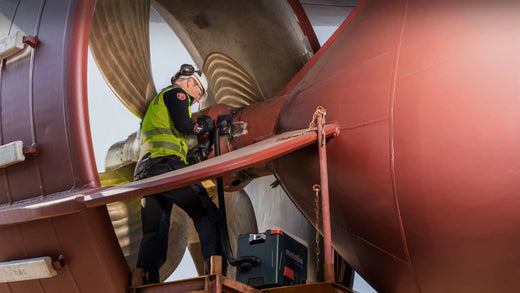
El proyecto estableció un procedimiento de reparación en campo de cinco pasos para estructuras offshore, realizado en gran parte por técnicos de acceso por cuerda:
- Acceso y protección / cerramiento: alcanzar y envolver las zonas exteriores y acceder a las secciones interiores.
- Lavado con agua a alta presión: eliminar suciedad, impurezas y sales solubles (sobre todo cloruros) del sustrato; vea por qué la contaminación por sales solubles provoca el fallo del recubrimiento.
- Limpieza por chorreado: chorreado húmedo en las zonas atmosférica, de salpicaduras y de mareas, seguido de una limpieza fina.
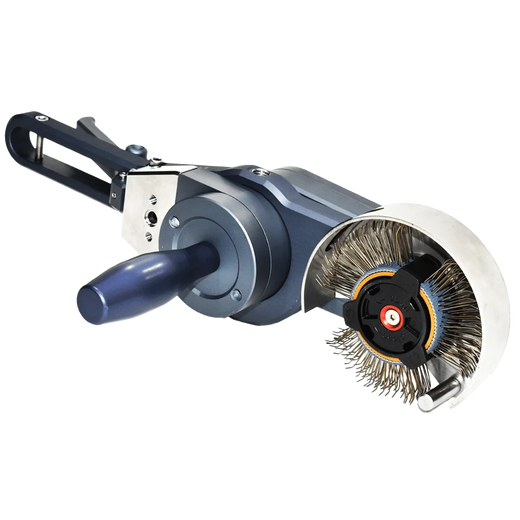
- Herramientas mecánicas: eliminación del recubrimiento y perfilado con un cepillo rotativo de cerdas, desoxidado con amoladora, eliminación de cascarilla y óxido con martillo de agujas y limpieza de cordones de soldadura con cepillo mecánico.
- Aplicación de la pintura: con rodillo, cartucho o brocha.
El paso 4 es donde la preparación mecánica de superficies demuestra su valor: en zonas confinadas, de acceso limitado y de salpicaduras donde el chorreado húmedo no es práctico, una herramienta rotativa de cerdas elimina el recubrimiento deteriorado y genera el perfil de anclaje en un solo paso sin granalla, el mismo principio en el que se basa el Bristle Blaster®. El Bristle Blaster® Pneumatic de MontiPower®, totalmente neumático y evaluado según ATEX para zona 1 de gas y zona 21 de polvo, produce en ensayos documentados sobre acero estándar una limpieza comparable a Sa 2½ con un perfil de 65–85 µm Rz; los resultados varían según la calidad del acero, el grado de oxidación, la banda y la técnica. Para daños localizados, consulte preparación para reparación puntual.
Cualificación de los recubrimientos de reparación
Fraunhofer IFAM sometió los recubrimientos de reparación candidatos a envejecimiento acelerado y a los ensayos mecánicos utilizados para la certificación, entre ellos:
- Resistencia al impacto (caída de peso, ASTM G14): más de 3,4 J para zonas que no son cubierta y más de 5,6 J para cubiertas y la zona de salpicaduras del embarcadero.
- Resistencia a la abrasión (Taber, ASTM D4060): pérdida de espesor del recubrimiento inferior a 50 µm por cada 1000 ciclos.
Junto con las categorías de corrosividad de la ISO 12944, estos criterios definen si cabe esperar que un sistema de reparación aplicado en condiciones de campo offshore sea duradero. Las reparaciones por debajo de la línea de flotación son un reto aparte; consulte la investigación de Fraunhofer sobre la reparación submarina de recubrimientos con ROV.
La conclusión para la preparación de superficies
Un recubrimiento de reparación solo es tan duradero como la superficie sobre la que se aplica. El procedimiento de campo de RepaKORR muestra por qué la preparación mecánica sin granalla —eliminación del recubrimiento y perfilado en un solo paso— es una parte consolidada del equipamiento de reparación offshore, sobre todo donde el chorreado abrasivo no llega o no puede utilizarse. Más información sobre la preparación de superficies en el sector marino y offshore.
Preguntas frecuentes
¿Qué fue el proyecto RepaKORR?
RepaKORR fue un proyecto de investigación alemán sobre sistemas y conceptos de reparación para recubrimientos anticorrosivos en estructuras eólicas offshore. Financiado por el Ministerio Federal de Educación e Investigación y coordinado por Muehlhan AG, combinó evaluación de daños, materiales de reparación, procedimientos de aplicación, inspección con drones y cualificación de recubrimientos por parte de Fraunhofer IFAM.
¿Por qué fallan los recubrimientos en las estructuras eólicas offshore?
El análisis de RepaKORR de estructuras de tipo plataforma atribuyó los daños del recubrimiento a daños mecánicos (alrededor del 30 %), diseño desfavorable (alrededor del 30 %), recubrimiento insuficiente (alrededor del 24 %), soldadura (alrededor del 11 %) y entorno (alrededor del 5 %). Gran parte se produce en esquinas, aberturas, uniones y zonas de difícil acceso, que también son las más difíciles de reparar.
¿Qué ensayos se utilizaron para cualificar los recubrimientos de reparación?
Fraunhofer IFAM combinó el envejecimiento acelerado con ensayos mecánicos: impacto por caída de peso según ASTM G14, con más de 3,4 J para zonas que no son cubierta y más de 5,6 J para cubiertas y zonas de salpicaduras de embarcaderos, y abrasión Taber según ASTM D4060, con una pérdida de espesor inferior a 50 µm por cada 1000 ciclos.
¿Qué papel tiene el Bristle Blasting en la reparación de recubrimientos offshore?
En el paso de herramientas mecánicas, después del lavado y donde el chorreado húmedo no es práctico. Una herramienta rotativa de cerdas elimina el recubrimiento deteriorado y crea un perfil de anclaje en un solo paso sin granalla, lo que resulta adecuado para zonas confinadas, de acceso limitado y de salpicaduras trabajadas mediante acceso por cuerda. En zonas peligrosas se utiliza una herramienta neumática evaluada según ATEX.
Este artículo resume, a título de referencia, investigaciones del proyecto RepaKORR presentadas públicamente. MontiPower no fue socio formal del proyecto; las herramientas de cepillo rotativo de MONTI aparecen en el paso de aplicación offshore documentado del proyecto.
Fuentes
- Fraunhofer-Gesellschaft, Long-lasting rust protection for offshore wind turbines (noticia de investigación, febrero de 2016). fraunhofer.de
- Muehlhan AG, Durable Coatings Offshore (presentación, 2016); Fraunhofer IFAM, ensayos de envejecimiento acelerado de recubrimientos de reparación offshore (presentación). Documentos del proyecto archivados por MontiPower.
- ISO 12944-3:2017, Corrosion protection of steel structures by protective paint systems — Part 3: Design considerations. iso.org
- ASTM G14, Standard Test Method for Impact Resistance of Pipeline Coatings (Falling Weight Test). astm.org
- ASTM D4060, Standard Test Method for Abrasion Resistance of Organic Coatings by the Taber Abraser. astm.org