Short answer: Corrosion protection coatings fall into three families. Metallic coatings such as hot-dip galvanizing and thermal spray add a sacrificial or barrier metal layer; organic coatings such as epoxy and polyurethane paints form a film of binder, pigments and fillers; conversion layers such as phosphating, chromating and anodizing chemically convert the substrate surface. All of them depend on correct surface preparation.
Corrosion protection is rarely a single coat of paint. In practice it is a stack of engineered layers, each doing a specific job. This article explains the three families of corrosion protection coating, what is inside a primer, what surface preparation each family needs, and why the surface underneath has to be right before any of them go on.
Three families of protection
Most corrosion protection systems fall into one of three families. Metallic coatings put a sacrificial or barrier layer of a different metal on top of the substrate: hot-dip galvanizing, thermal (metal) spray, electroplated coatings and vapour-deposited layers all fall here. Organic coatings are paints, enamels and linings: a binder carrying pigments and fillers, cured into a continuous film. Conversion layers chemically transform a thin surface layer of the substrate itself into a more corrosion-resistant, better-bonding surface. Phosphating (iron or zinc phosphate), chromating (yellow or green chromate) and anodizing (electrochemical oxidation, common on aluminium and titanium) are the main routes. For the underlying mechanisms, see our guide to what corrosion is and how to prevent it.
Metallic coatings in practice
Hot-dip galvanizing
In hot-dip galvanizing, fabricated steel is immersed in molten zinc at about 435–455 °C, forming zinc-iron alloy layers bonded metallurgically to the steel. Zinc protects in two ways: as a barrier, and sacrificially, corroding in preference to exposed steel at scratches and cut edges. Surface preparation is built into the process: the steel is degreased, acid-pickled to remove mill scale and rust, and fluxed, because zinc will not react with an unclean steel surface. More background is in our article on galvanized steel.
Thermal spray (metallizing)
Thermal spray zinc, aluminium or zinc-aluminium is applied on site or in the shop by melting wire or powder and spraying it onto the steel. Unlike galvanizing, the bond is mechanical, so the coating depends heavily on the surface: AMPP guidance calls for steel free of oil and grease (SSPC-SP 1) and abrasive blast cleaned, typically to SSPC-SP 10/NACE No. 2 for atmospheric service and SSPC-SP 5/NACE No. 1 for immersion, with a sharp, angular profile of about 65–125 µm (2.5–5.0 mil). Research on alternatives is ongoing; a 2019 study examined bristle blasting as substrate preparation for thermal spraying, but the governing specification decides which methods are acceptable.
Zinc-rich primers
Zinc-rich primers sit between the metallic and organic families: a high loading of zinc dust in an organic (epoxy) or inorganic (silicate) binder gives galvanic protection from a paint film. Our article on galvanic corrosion and zinc-rich primers explains how that sacrificial action works and why it needs clean, profiled steel to make electrical contact.
What is actually inside a primer
A primer is not one ingredient. It is built from binder, pigments and fillers working together, often on top of a conversion or metallic layer that provides part of the long-term performance. Each component has a job:
- Binder (for example epoxy, polyurethane, alkyd or silicate): holds the film together and provides adhesion to the substrate.
- Pigments: carry the corrosion-inhibiting or barrier function. Zinc dust protects sacrificially, inhibitive pigments such as zinc phosphate slow the corrosion reaction, and lamellar pigments such as micaceous iron oxide or aluminium flake lengthen the path for water and oxygen.
- Fillers (extenders): control film build, cost and mechanical properties.
- Solvents or water: allow application, then evaporate. They contribute nothing to protection.
For a working guide to the binder chemistries, see generic types of protective coatings.
Conversion layers and the chromate question
Conversion layers are thin, so they are used mainly as a pre-treatment that improves adhesion and under-film corrosion resistance of a following paint or powder coating, rather than as stand-alone protection in severe environments. Phosphating is common on steel before painting or powder coating; anodizing is the standard route on aluminium.
Chromating has been under regulatory pressure because it is based on hexavalent chromium. In the EU, chromium trioxide and several chromates and dichromates used in these processes were added to REACH Annex XIV with a sunset date of 21 September 2017, so they may only be used under an authorisation. Many users have switched to trivalent or chromium-free alternatives. Older assets, particularly in aerospace and rail, still carry chromate-containing coatings, and removing them requires dust control and protective equipment; see our page on safe removal of chromium-6 coatings.
Surface preparation by protection family
| Protection family | Typical surface preparation | Notes |
|---|---|---|
| Hot-dip galvanizing | Degreasing, acid pickling and fluxing in the galvanizing plant | Uncoated areas show immediately after withdrawal from the bath |
| Thermal spray (zinc, aluminium) | SSPC-SP 1, then abrasive blast to SSPC-SP 10 (atmospheric) or SSPC-SP 5 (immersion) | Sharp, angular profile of about 65–125 µm (2.5–5.0 mil) |
| Organic coatings (high-performance) | As stated on the product data sheet, commonly ISO 8501-1 Sa 2½ / SSPC-SP 10 with a specified profile | Surface-tolerant maintenance coatings may accept St 3 or SSPC-SP 11 |
| Conversion layers | Chemical cleaning and degreasing in the treatment line | Substrate-specific: phosphating on steel, anodizing on aluminium |
Why the substrate always comes first
None of these systems, whether metallic, organic or conversion, will outperform the surface they are applied to. Contamination, mill scale, existing corrosion or an inadequate anchor profile will undermine a chromate conversion layer as readily as it undermines a two-pack epoxy. That is why a sound coating specification starts with a surface preparation standard (typically ISO 8501-1 or SSPC/AMPP), not with the coating itself.
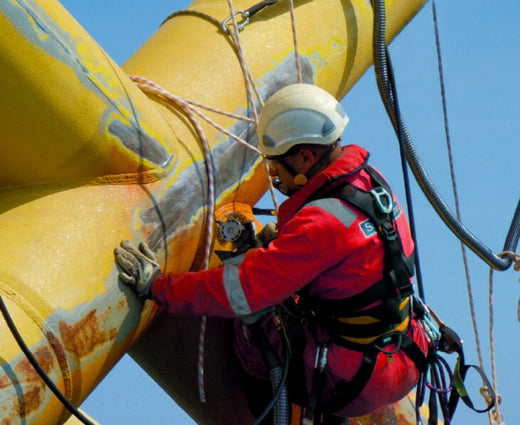
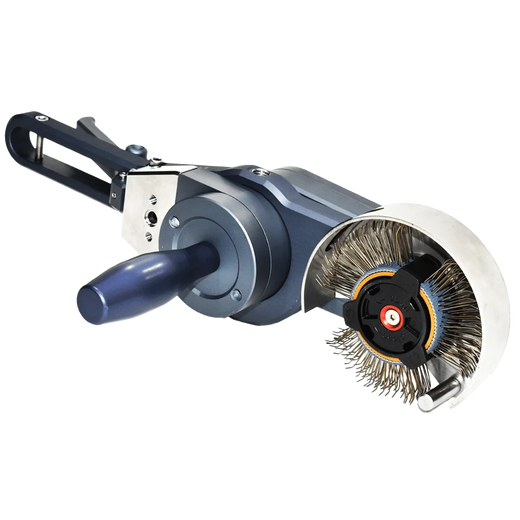
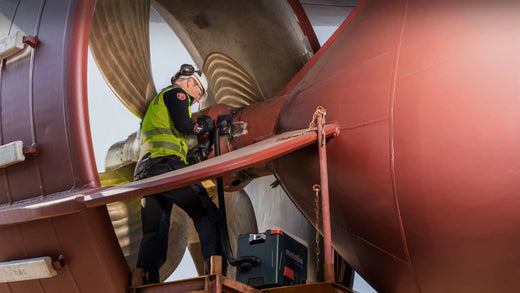
For field maintenance of organic systems, where blasting is often impractical, the Bristle Blaster® gives cleanliness comparable to ISO 8501-1 Sa 2½ / SSPC-SP 10 with a 65–85 µm Rz anchor profile on standard steel in documented tests, without loose abrasive. Results vary with steel grade, rust grade, belt and technique, and stainless-steel belts are used on aluminium and stainless substrates to avoid contamination. See our Controlled Preparation System for how MontiPower® tools get a substrate ready for the protection route a specification calls for, and our practical guide to corrosion protection for steel structures for how these systems are specified in the field.
Frequently asked questions
What are the three main types of corrosion protection coating?
Metallic coatings (hot-dip galvanizing, thermal spray, electroplating), organic coatings (paints, enamels and linings built from binder, pigments and fillers) and conversion layers (phosphating, chromating, anodizing). Many systems combine them, for example a zinc-rich or galvanized base under an epoxy and polyurethane paint system, or a phosphate or anodized layer under a powder coating.
Do galvanized and thermal spray coatings need surface preparation?
Yes. In hot-dip galvanizing, steel is degreased, acid-pickled and fluxed because zinc will not react with an unclean surface. Thermal spray zinc or aluminium needs abrasive blasting to SSPC-SP 10 for atmospheric service or SSPC-SP 5 for immersion, with a sharp, angular profile of about 65–125 µm (2.5–5.0 mil).
Are chromate conversion coatings still allowed?
Hexavalent chromium compounds used for chromating, including chromium trioxide and sodium and potassium dichromate, are on REACH Annex XIV in the EU with a sunset date of 21 September 2017, so continued use needs an authorisation. Many users have moved to trivalent or chromium-free alternatives. Old chromate-containing coatings must be removed with dust control and PPE.
Which coating protects steel best?
There is no single best coating. The right system depends on the exposure (atmospheric, splash zone, immersion, buried), the required service life, whether work is new construction or maintenance, and what surface preparation can realistically be achieved on site. A well-applied system matched to its environment outperforms a premium product applied over a poorly prepared surface.
Sources
- American Galvanizers Association, The HDG Process (degreasing, pickling, fluxing; bath temperature). galvanizeit.org
- AMPP, How to Inspect Thermal Spray Zinc Metalizing (2021; SSPC-SP 5/SP 10, 2.5–5.0 mil angular profile). ampp.org
- Commission Regulation (EU) No 348/2013 amending Annex XIV of REACH (chromium trioxide and chromates; sunset date 21 September 2017). legislation.gov.uk
- Corrosion Alliance, Principles of Corrosion. corrosionalliance.com
- MontiPower, Bristle Blaster® technical data sheets (cleanliness comparable to Sa 2½ / SSPC-SP 10; 65–85 µm Rz on standard steel in documented tests; stainless belts for non-ferrous metals).