Short answer: Surface-tolerant coatings, typically aluminium epoxy mastics, are formulated to wet out and bond to imperfect hand- or power-tool-cleaned steel and sound, compatible existing coatings. They are the maintenance answer where blasting is impractical, but 'tolerant' means a wider margin, not none: loose rust, oil, mill scale and soluble salts still cause failure, and they last longest on a clean, profiled surface.
In new construction, the heavy-duty answer is a three-coat system (inorganic zinc-rich primer, epoxy intermediate, polyurethane topcoat) over blast-cleaned steel. In maintenance, that ideal is often impossible: the asset is in service, blasting is barred, and the existing coating must be over-coated. This is where surface-tolerant coatings earn their place. This article explains what they are, when to choose them over a full system, how they fail, and how better preparation turns their margin into service life.
Where they came from
The early surface-tolerant coatings were largely single-package products: oil-based paints, alkyds and chlorinated rubbers. They were forgiving but limited, with poor chemical resistance and low film build. The step change came with two-component high-solids epoxy mastics, followed by tolerant polyurethanes and acrylics, which combined tolerance of poor preparation with the chemical resistance and film build that earlier coatings lacked.
What 'surface-tolerant' actually means
A surface-tolerant coating is formulated to wet out and bond to less-than-ideal surfaces: hand- or power-tool-cleaned steel, tight residual rust, and compatible existing coatings. Aluminium epoxy mastics are the classic example: tolerant of minimal surface preparation, compatible with and topcoatable by many generic types, high in solids and low in VOC, with high film build and good barrier protection from their laminar aluminium pigmentation. They apply by spray, brush or roller, which suits field maintenance.
The trade-offs are real: two-component products with short pot life at elevated temperature, a cure-to-topcoat window that can be long, and overspray to manage. But for over-coating and repair where blasting is off the table, they are often the only practical choice. How they compare with other generic families is covered in generic types of protective coatings.
The chemistry, briefly
Most surface-tolerant systems are reactive thermosets built on epoxy mastic resins cured with polyamides or amido-amines, chemistries chosen for moisture tolerance during cure and adhesion to imperfect surfaces. The aluminium pigment forms overlapping laminar platelets that lengthen the path for water and ions, giving the barrier its strength. Modern formulations push solids high to build film fast in a single coat.
Tolerant is not indifferent
Here is the part the marketing tends to skip. 'Surface-tolerant' describes a wider margin of error, not the absence of one. Loose rust, intact mill scale, oil, grease and soluble salts still cause adhesion failure and under-film corrosion beneath any coating, tolerant or not (see soluble salt contamination and coating failure). The better the surface, the longer even a tolerant coating lasts.
Tolerant system or full system? A decision guide
Choosing between a surface-tolerant maintenance coating and a full new-construction system comes down to a few honest questions:
- Can the asset be taken out of service?
- Can containment be erected and blasting permitted?
- Is the existing coating sound and compatible?
- What exposure and design life are required?
If the asset is live, containment is impractical and the existing system is sound, a surface-tolerant mastic over well-cleaned steel is the pragmatic answer. If you can blast and the exposure is severe or immersion, a full zinc/epoxy/polyurethane system will outlast it. The mistake is using a tolerant coating as an excuse to skip preparation that was actually possible.
Tolerant primer or full primer?
Within a maintenance system the same question recurs at the primer. A surface-tolerant primer (epoxy mastic, moisture-tolerant epoxy) buys margin over imperfect surfaces; a full-performance primer (inorganic zinc) delivers the best protection but demands a clean, well-profiled surface. The deciding factor is, again, what surface you can actually achieve, and grit-free preparation widens that choice by making a properly prepared surface achievable in maintenance conditions that once ruled it out.
The economics of tolerant coatings
Surface-tolerant coatings exist because maintenance economics differ from new-build economics. The cost of taking an operating asset out of service, erecting containment and blasting often dwarfs the coating itself, so a tolerant coating that can be applied in-service, even with a shorter service life, can be the rational choice. For example, a Minnesota DOT bridge maintenance manual cited by KTA-Tator pairs a one-coat surface-tolerant polyamide epoxy over SSPC-SP 3 power tool cleaning with an expected service life of roughly 5–7.5 years for touch-up work. The calculation shifts when a method lets you achieve a better surface without those constraints: then you can have the in-service convenience and the longer service life of a well-prepared surface.
Overcoating: compatibility and adhesion
Most surface-tolerant work is overcoating, and overcoating has its own failure mode: the new coat may be incompatible with, or unable to bond to, the old one. Before committing:
- Confirm the existing generic type, by analysis or from historical records.
- Check the manufacturer's compatibility guidance for the overcoat system.
- Run an adhesion test on a trial patch: a tape test (ASTM D3359) or pull-off test (ASTM D4541) on the actual surface.
A successful patch is worth more than any data-sheet promise.
How mastics fail, and how to prevent it
Surface-tolerant coatings are forgiving, not invulnerable. They disbond over loose rust, intact mill scale and oil; they blister over soluble salts; they fail to topcoat if the maximum recoat window is missed; and they cure slowly to topcoat in cold conditions, tempting premature overcoating. Prevention is unglamorous: clean to remove oil and loose material, address salts, hit the film build in one pass, and respect the recoat window.
Field application best practice
Because tolerant coatings live in maintenance, field discipline matters: mix full kits (never partial), power-mix and respect induction time, monitor environmental conditions continuously because the work is at the mercy of the weather, and keep the surface temperature above the dew point by the margin the specification requires. High-solids mastics build fast, so wet-film checks prevent both under- and over-application.
Giving a tolerant coating a better surface
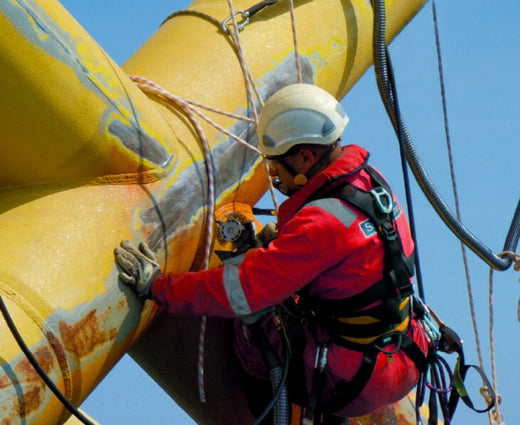
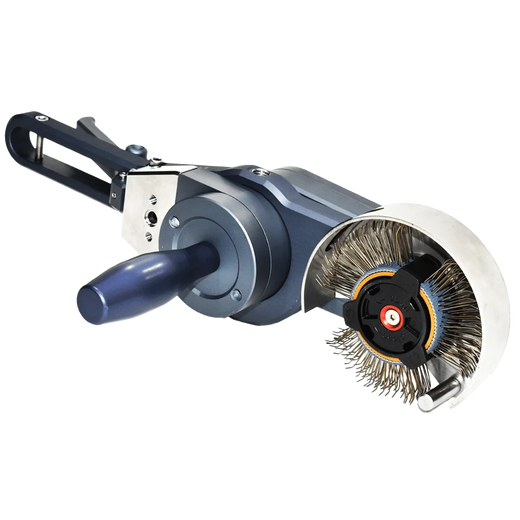
The reason maintenance teams reach for surface-tolerant coatings is usually constraint: the asset is live, containment is impractical, blasting isn't allowed. That same constraint is what in-service grit-free preparation was built for. Consider a live tank farm, an offshore structure or a pipeline field joint, classic surface-tolerant territory because blasting is impractical. With the Bristle Blaster®, documented tests show cleanliness comparable to ISO 8501-1 Sa 2½ (up to Sa 3, depending on belt and technique) with a 65–85 µm Rz anchor profile on standard steel, without loose media or blast containment, at height and in confined spaces; the pneumatic version is ATEX-evaluated for zone 1 gas and zone 21 dust. Results vary with steel grade, rust grade, belt and technique, and a power-tool result is accepted against the specification by the inspector, typically under SSPC-SP 11 or as a documented equivalent.
The maintenance team keeps the in-service working method it needs and hands the coating, tolerant or full-performance, a better prepared surface. You no longer have to choose between 'nothing better than hand tools' and 'shut the asset down to blast'. See our comparison of bristle blasting vs sandblasting, the guide to removing heavy rust without sandblasting and the overview of alternatives to sandblasting steel.
Building it into a maintenance plan
The smartest maintenance programmes do not treat surface-tolerant coatings as a permanent compromise but as one option in a planned hierarchy: full system where the asset can be prepared properly, tolerant system where it cannot, and a preparation method that keeps shrinking the second category. Each cycle, more of the asset can be prepared to a proper standard in-service, so more of it can carry a longer-life system.
Surface-tolerant coatings solved a real problem: how to protect assets that cannot be blasted. But the problem they solved was a constraint, not a preference; nobody chooses a worse surface on purpose. As grit-free preparation relaxes that constraint, the role of tolerant coatings shifts from 'the only option' to 'one option', chosen on merit rather than necessity. The smart maintenance strategy uses them deliberately, not by default.
The bottom line
Surface-tolerant coatings are one of maintenance engineering's most useful tools: they make protection possible where the ideal is not. But 'tolerant' buys margin, not miracles, and the better the surface, the longer they last. Grit-free mechanical preparation lets you give them that better surface without the constraints that sent you to a tolerant coating in the first place, which is how a tolerant coating's wider margin becomes documented service life.
Key takeaways
- Surface-tolerant coatings (epoxy mastics) bond to imperfect, hand/power-tool-cleaned surfaces and sound existing coatings.
- They are the maintenance answer where blasting is impossible, but 'tolerant' is a wider margin, not none.
- Loose rust, mill scale, oil and soluble salts still cause failure under any coating.
- Confirm compatibility and test adhesion on a trial patch before over-coating.
- Grit-free preparation can give even a tolerant coating a surface comparable to ISO 8501-1 Sa 2½ in-service, turning its margin into service life.
Frequently asked questions
Are surface-tolerant coatings as good as a full blast-and-coat system?
In severe and immersion service, a full system over blast-cleaned steel generally outlasts a tolerant coating over hand-cleaned steel. Tolerant coatings win on practicality where blasting is impossible or uneconomic, and they last longest when the surface is still properly prepared, cleaned of oil and salts and, ideally, profiled.
Do surface-tolerant coatings need any surface preparation?
Yes. 'Tolerant' means a wider margin, not none. Loose rust, intact mill scale, oil, grease and soluble salts still cause adhesion failure and under-film corrosion, so solvent cleaning, removal of loose material and, ideally, an anchor profile remain essential. The product data sheet states the minimum preparation the manufacturer will accept.
What is an epoxy mastic?
A high-solids, surface-tolerant two-component epoxy, often aluminium-pigmented, formulated to wet out and bond to imperfect, hand- or power-tool-cleaned surfaces and many existing coatings. It builds high film thickness in one coat and gives strong barrier protection, which is why it is the standard maintenance coating for in-service steel.
Can I apply a surface-tolerant coating over an existing coating?
Often yes, if the existing coating is sound and compatible. Identify its generic type from records or analysis, check the manufacturer's compatibility guidance and run a tape (ASTM D3359) or pull-off (ASTM D4541) adhesion test on a trial patch before committing to the full area.
Sources
- KTA-Tator, MnDOT’s Approach to Improving Bridge Maintenance Painting. kta.com
- Corrosion Alliance, Generic Types of Atmospheric Coatings. corrosionalliance.com
- SSPC, SSPC-SP 11, Power Tool Cleaning to Bare Metal. glavin.net
- MontiPower, Bristle Blaster® technical data sheets and product pages (cleanliness comparable to ISO 8501-1 Sa 2½ / Sa 3; 65–85 µm Rz on API 5L steel in documented tests; Pneumatic ATEX-evaluated zone 1 / zone 21).