Short answer: Galvanized steel is steel coated with zinc to protect it from corrosion. The zinc acts as a barrier and also corrodes sacrificially, so small scratches or cut edges stay protected. The most common method is hot-dip galvanizing in molten zinc at about 435–455 °C; other methods include electrogalvanizing, mechanical plating, zinc thermal spraying and sherardizing.
Galvanized steel is widely used across industries and applications, from bridges and towers to fasteners and car bodies. This article explains what galvanized steel is, how it differs from non-galvanized steel, the different ways of galvanizing steel, and how damaged galvanizing is prepared and repaired.
What is galvanized steel?
There are many advantages to using steel. It can be used in many situations and is known for its strength. Yet it also has a disadvantage: carbon steel rusts over time, which reduces both the strength and the appearance of the steel object. To counteract this, the steel can be galvanized. This involves applying a layer of zinc to the steel. In hot-dip galvanizing, the zinc reacts with the iron in the steel and forms metallurgically bonded zinc-iron alloy layers, usually topped by a layer of pure zinc. This protective coating makes the steel much less likely to rust, so the material lasts longer.
How does galvanizing protect steel?
Zinc protects steel in two ways:
- Barrier protection: the zinc coating separates the steel from moisture and oxygen, the two ingredients of rust.
- Cathodic (sacrificial) protection: zinc is less noble than iron. Where the coating is scratched or at a cut edge, the zinc corrodes in preference to the exposed steel and keeps it protected. This is the same principle used in zinc-rich primers; see galvanic corrosion and zinc-rich primers.
The zinc-iron alloy layers of a hot-dip coating are also tougher and more resistant to mechanical damage than paint films, and the pure zinc top layer adds impact resistance. Galvanizing is one of several metallic, organic and combined protection systems compared in corrosion protection coatings explained.
Ways of galvanizing steel
Hot-dip galvanizing
The technique most commonly used is hot-dip galvanizing. The steel is first cleaned: degreased, pickled in acid to remove mill scale and rust, and fluxed. It is then fully immersed in a bath of molten zinc at about 435–455 °C (815–850 °F) containing at least 98% zinc. During immersion, the zinc reacts with the iron to form the bonded alloy layers. Batch hot-dip galvanizing of fabricated parts gives thicker coatings than continuous (in-line) galvanizing of sheet and wire.
Other galvanizing and zinc coating techniques
- Electrogalvanizing (zinc electroplating): the steel is placed in a zinc salt solution and an electric current deposits zinc on the surface. The coating is thin and uniform, which makes it the most widely used method for small fasteners with fine threads, but it offers less corrosion protection outdoors than hot-dip galvanizing unless it is supplemented by further coatings.
- Mechanical plating: small parts are tumbled in a drum together with zinc powder, chemicals and impact media such as glass beads. The mechanical energy cold-welds the zinc onto the steel. Coating thicknesses are often similar to those of electroplated parts.
- Zinc thermal spraying (metallizing): zinc wire or powder is melted in a spray gun and sprayed onto the steel, which must first be blast cleaned and profiled. Coatings of up to about 250 µm can be applied, in the factory or in the field. Surface preparation for thermal spraying is demanding; see bristle blasting as surface preparation for thermal spraying.
- Sherardizing (thermal diffusion galvanizing): the steel is heated together with zinc powder in a closed, rotating drum, at around 380 °C for sherardizing and 320–500 °C for thermal diffusion processes. Zinc diffuses into the steel surface and forms an even zinc-iron layer, typically 20–120 µm thick.
- Zinc-rich paints: not a galvanizing process as such, but paints with a high loading of zinc dust that give cathodic protection to small exposed areas of steel. They are widely used as primers and for repairing galvanized coatings.
Repairing and preparing damaged galvanized steel
Galvanized coatings can be damaged by welding, cutting, handling or long service in aggressive environments. ASTM A780 allows three methods to touch up and repair them: zinc-rich paint, zinc thermal spray (metallizing) and zinc solder. Each needs a properly prepared surface. For zinc-rich paint, the American Galvanizers Association summarizes the requirement as cleaning to SSPC-SP 10 near-white metal for immersion applications and SSPC-SP 11 power tool cleaning to bare metal for less aggressive field conditions, with a repair coating 50% thicker than the surrounding galvanizing but not more than 4.0 mils (about 100 µm).
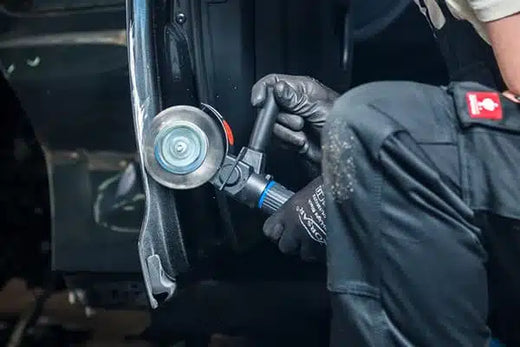
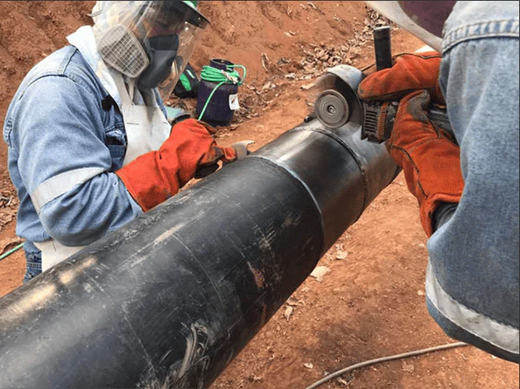
Blasting a small repair area on site is often impractical. The Bristle Blaster® from MontiPower® cleans corroded or weld-damaged areas back to bare steel and creates an anchor profile in one pass, without loose abrasive. In documented tests on standard steel it produces cleanliness comparable to Sa 2½ / SSPC-SP 10 and a 65–85 µm Rz profile; results vary with steel grade, rust grade, belt and technique. Because it removes zinc as well as rust, it is used locally on the area to be repaired rather than over sound galvanizing. See spot repair for more on preparing small areas.
Galvanized steel that is to be painted (a duplex system) needs its own preparation: the zinc surface must be clean and suitably roughened or treated for the paint to adhere, without removing more zinc than necessary. Follow the paint manufacturer's instructions for the specific coating. For wider guidance on protecting steel, read corrosion protection for steel structures.
Frequently asked questions
What is the difference between galvanized and non-galvanized steel?
Galvanized steel carries a zinc coating that protects it in two ways: as a barrier against moisture and oxygen, and cathodically, because zinc corrodes in preference to steel where the coating is damaged. Non-galvanized carbon steel has no such protection and rusts unless it is painted or otherwise coated.
How hot is the zinc bath in hot-dip galvanizing?
According to the American Galvanizers Association, the molten zinc bath is kept at about 815–850 °F (435–455 °C) and contains at least 98% pure zinc. During immersion, the zinc reacts with the iron in the steel to form metallurgically bonded zinc-iron alloy layers, usually topped by a layer of pure zinc.
How do you repair damaged galvanized steel?
ASTM A780 allows three repair methods: zinc-rich paint, zinc thermal spray (metallizing) and zinc solder. For zinc-rich paint, the damaged area is cleaned to SSPC-SP 10 for immersion service or SSPC-SP 11 power tool cleaning to bare metal for less aggressive conditions, and the repair is applied 50% thicker than the surrounding coating, up to 4.0 mils.
Can you bristle blast galvanized steel?
Yes, but selectively. A Bristle Blaster® removes zinc along with rust, so it is used to prepare damaged or corroded areas to bare metal with an anchor profile before a zinc-rich or metallized repair, not to clean intact galvanizing. On sound galvanizing that is to be painted, follow the coating manufacturer's instructions for light surface preparation.
Sources
- American Galvanizers Association, HDG process. galvanizeit.org
- Galvanizers Association of Australia, Types of galvanizing and other zinc coatings. gaa.com.au
- American Galvanizers Association, Touch-up methods (ASTM A780). galvanizeit.org
- American Galvanizers Association, Zinc-rich paint repair (ASTM A780 surface preparation and thickness). galvanizeit.org
- MontiPower, Bristle Blaster® technical data (cleanliness comparable to Sa 2½; 65–85 µm Rz).