Short answer: Microbiologically influenced corrosion (MIC) is corrosion started or accelerated by microorganisms, mainly sulfate-reducing, acid-producing and iron-oxidising bacteria living in biofilms. It causes aggressive localised pitting in pipelines, tanks and submerged steel. Coatings control it as an intact barrier over properly prepared steel: kill the biofilm, remove deposits, prepare to the specified grade, test for salts and coat promptly.
Microbiologically influenced corrosion (MIC), also called microbial corrosion or biocorrosion, is corrosion initiated or accelerated by the metabolic activity of microorganisms. It is not a separate electrochemical mechanism. Bacteria and other microorganisms create localised chemical environments that start or speed up ordinary corrosion processes, most commonly pitting, at rates higher than the bulk environment would produce alone. Often-cited estimates attribute around 20% of total corrosion cost to MIC, which makes it one of the economically significant corrosion mechanisms in industrial infrastructure.
This article explains which organisms cause MIC, where it occurs, how it damages steel, how it is detected, and what it means for coating selection and surface preparation. It is written for corrosion engineers, coating specifiers and asset integrity managers.
Which microorganisms cause MIC in steel infrastructure?
MIC in carbon steel and other ferrous metals is primarily associated with three groups of bacteria:
Sulfate-reducing bacteria (SRB)
SRB are anaerobic bacteria: they operate in the absence of oxygen and use sulfate ions (SO₄²⁻) as an electron acceptor, reducing sulfate to hydrogen sulfide (H₂S). H₂S is corrosive to steel, and the biogenic sulfide environment it creates drives aggressive localised pitting. SRB are the most widely documented MIC organisms; one review attributes almost half of MIC-related cases to them. They are found in:
- Pipeline internals in oil and gas systems where free water is present
- Submerged zones of offshore structures and seabed sediments
- Ballast water systems and water injection systems
- Heat exchanger internals and cooling water systems with biofouling
- External surfaces of buried pipelines in anaerobic soils
Acid-producing bacteria (APB)
APB are aerobic or facultatively anaerobic bacteria that produce organic acids (acetic, formic, lactic) as metabolic by-products. These acids locally reduce the pH at the metal surface and accelerate corrosion. APB often work together with SRB: APB consume oxygen in the biofilm, creating the anaerobic conditions SRB need, while also making the local environment more aggressive.
Iron-oxidising bacteria (IOB)
IOB are aerobic bacteria that oxidise ferrous iron (Fe²⁺) to ferric iron (Fe³⁺) and use the energy released to drive their metabolism. The deposits they form contribute to oxygen-concentration cells, with corrosion concentrated beneath them. IOB produce voluminous, reddish-brown tubercles (mounds of iron oxides and bacterial biomass) over active corrosion sites, a distinctive visual indicator of possible MIC.
Where does MIC occur in industrial and marine assets?
| Asset / location | Primary MIC organisms | Key conditions driving MIC |
|---|---|---|
| Oil and gas pipeline internals | SRB, APB | Stagnant or slow-flowing water, sulfate in produced water, anaerobic conditions |
| Offshore structure submerged zone | SRB, IOB | Biofilm formation on unprotected steel; sediment accumulation at the base of jacket legs |
| Ballast tanks (marine vessels) | SRB, APB | Accumulated sludge, stagnant ballast water, anaerobic conditions at tank bottom |
| Water injection systems (O&G) | SRB, APB | Sulfate in injected seawater, biofouling of injection lines |
| Buried pipelines | SRB | Anaerobic clay soils, high-sulfate groundwater, disbonded coating shielding cathodic protection |
| Cooling water systems | IOB, APB, SRB | Warm water, nutrients, biofouling control failures |
| Potable water infrastructure | IOB, APB | Low-flow zones, stagnation, inadequate disinfection |
| Mining process vessels | APB, SRB | Acidic process environments, sulfate-rich slurries |
How does MIC damage steel?
MIC produces corrosion through several mechanisms that often operate at the same time within a biofilm:
- Biogenic H₂S production: SRB-produced H₂S reacts with steel to form iron sulfide (FeS) corrosion products. FeS is cathodic to steel and forms galvanic couples that accelerate pitting of the surrounding steel.
- Local acidification: organic acids from APB and the acidic chemistry inside active pits lower the local pH well below that of the bulk fluid, increasing the dissolution rate of steel.
- Differential aeration cells: biofilms and deposits restrict oxygen access to the steel beneath them, creating oxygen-concentration cells in which the covered area becomes anodic and the open surface cathodic.
- Electron uptake and cathodic depolarisation: the classical theory held that SRB accelerate corrosion by consuming cathodic hydrogen. This remains debated. Current reviews distinguish corrosion driven by corrosive metabolites (such as H₂S and acids) from corrosion in which some microbes take up electrons from the iron surface (extracellular electron transfer, EET-MIC).
The practical result is aggressive localised pitting, often with a distinctive morphology (irregular, undercut pits with black FeS deposits in SRB-related MIC; tubercle-covered pits where IOB are active), at rates that exceed what the bulk chemical environment would produce.
How is MIC detected and monitored?
MIC diagnosis combines microbiological, chemical and corrosion evidence. NACE TM0212 sets out the conditions that need to be met before MIC is confirmed as the cause of internal corrosion, because the presence of microorganisms alone does not prove they caused the damage.
- Bacterial culture testing: Most Probable Number (MPN) serial dilution culture methods estimate SRB, APB and IOB populations in produced water, process water and biofilm samples. Only a fraction of the organisms present will grow in culture media, so cultures confirm presence but do not measure corrosion rate.
- Molecular methods: qPCR (quantitative polymerase chain reaction) identifies and quantifies specific MIC-relevant organisms from water, solids or biofilm samples. It counts living, inactive and dead cells and is increasingly used for monitoring in oil and gas production.
- Corrosion monitoring: coupons, electrical resistance probes and linear polarisation resistance (LPR) instruments provide corrosion rate data; elevated rates in MIC-prone environments corroborate the microbiological data.
- Ultrasonic inspection: external UT scanning of pipeline sections and vessel walls detects localised wall loss consistent with MIC pitting.
How do protective coatings address MIC?
Protective coatings address MIC mainly through barrier protection: keeping microorganisms, water and their metabolic products away from the steel surface. A well-applied, intact coating with good adhesion to properly prepared steel is the primary defence against both abiotic and microbial corrosion.
Key coating system considerations for MIC environments:
- Coating continuity is critical: any holiday, mechanical damage or adhesion failure creates an entry point for bacteria and their corrosive metabolites. MIC is particularly aggressive at coating defects because disbonded coating creates the shielded, nutrient-accumulating crevice that SRB favour. Holiday (discontinuity) testing, for example to NACE SP0188, is normally specified for immersion-service linings.
- Resistance to H₂S and organic acids: some standard epoxy formulations can soften or degrade in high-H₂S environments. Specify products the manufacturer has tested and approved for the expected exposure.
- Biocide treatment before coating: where biofilm and MIC are established, biocide treatment (for example a biocide slug during pigging, or manual cleaning with biocide solution) before surface preparation and coating is common practice to reduce the active biological community before the steel is sealed.
- Surface preparation quality: biofilm residues and MIC corrosion products must be physically removed before coating. High-performance immersion linings are typically specified over SSPC-SP 10 / Sa 2½ or better; the coating data sheet sets the grade. Soluble salt testing after preparation is essential, because MIC corrosion products can carry sulfides, chlorides and sulfates that must be below specification limits.
How should MIC-affected steel be prepared for coating?
Steel with established MIC damage presents surface preparation challenges similar to steel with aggressive chloride pitting, because pitting is the primary damage morphology in both. See pitting corrosion and surface preparation. The approach:
- Biocide treatment: apply biocide solution to kill active bacteria before mechanical preparation, so viable bacteria are not redistributed during preparation.
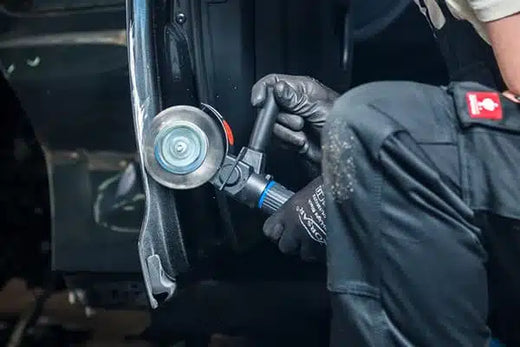
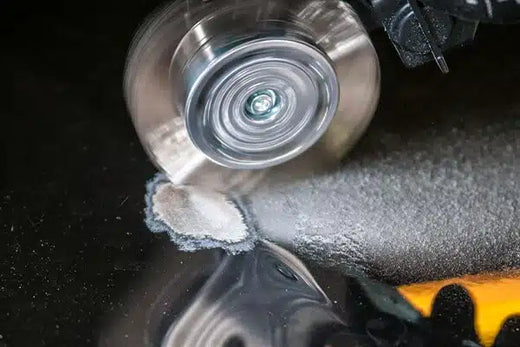
- Bulk removal of MIC deposits: iron sulfide deposits, tubercles and corrosion crust must come off before final preparation. The Tercoo® rotating disc is suited to mechanical removal of heavy corrosion deposits in maintenance work.
- Blast or mechanical preparation to the target grade: commonly SSPC-SP 10 / Sa 2½ for protective coating systems and SP 5 / Sa 3 for thermal spray, as the specification requires. Where blasting is not possible, an impact tool such as the Bristle Blaster® can produce cleanliness comparable to Sa 2½ with an anchor profile; the two-step method case study shows Tercoo® bulk removal followed by profiling. Deep pits are the hardest areas for any power tool, so check pit bottoms carefully.
- Soluble salt testing: sulfides, chlorides and sulfates in MIC-affected steel must be below specification limits before coating. Water wash and retest if required. See soluble salt contamination and coating failure.
- Coat promptly: bare steel in an MIC-active system can be recolonised and will flash rust. Apply primer as soon as possible after surface preparation is complete and verified.
Key takeaways
- MIC is corrosion initiated or accelerated by the metabolic activity of microorganisms, primarily sulfate-reducing bacteria (SRB), acid-producing bacteria (APB) and iron-oxidising bacteria (IOB). Often-cited estimates put its share of total corrosion cost at around 20%.
- MIC produces aggressive localised pitting with characteristic morphology (black FeS deposits with SRB, tubercles with IOB) at rates higher than the bulk environment alone would cause.
- Bacteria in a sample do not prove MIC; diagnosis combines microbiological, chemical and corrosion evidence (NACE TM0212).
- Protective coatings address MIC through barrier protection. Coating continuity is critical: any disbondment or holiday creates the shielded, nutrient-rich crevice SRB favour.
- Preparing MIC-affected steel means biocide treatment, removal of MIC deposits (Tercoo® suits maintenance work), preparation to the specified grade, soluble salt testing and prompt priming.
Related articles
- Corrosion control for industrial assets
- Industrial coatings: types, systems and surface preparation requirements
- SSPC surface preparation standards: complete guide
Frequently asked questions
What bacteria cause microbiologically influenced corrosion?
The main groups on steel are sulfate-reducing bacteria (SRB), which produce hydrogen sulfide; acid-producing bacteria (APB), which lower the local pH; and iron-oxidising bacteria (IOB), which form tubercles over corrosion sites. They usually act together within a biofilm, where APB consume oxygen and create the anaerobic conditions SRB need.
How do you confirm that corrosion is MIC?
Finding bacteria is not enough, because microorganisms are present in most water systems. NACE TM0212 requires several lines of evidence: microbiological testing (culture or qPCR), chemical analysis of deposits and fluids, and corrosion data or pit morphology consistent with microbial activity. Together they show the organisms caused the damage.
Can coatings prevent MIC?
Yes, an intact, well-adhered coating prevents MIC by keeping microorganisms and their metabolites off the steel. The weak points are holidays, mechanical damage and disbonded areas, which create shielded crevices where SRB thrive. Good surface preparation, holiday testing and prompt repair of defects are what make the barrier work.
What surface preparation does MIC-affected steel need?
Kill active bacteria with biocide, remove iron sulfide deposits and tubercles, then prepare to the grade on the coating data sheet, commonly SSPC-SP 10 / Sa 2½ for immersion linings. Test soluble salts, wash and retest if they exceed the limit, and prime promptly to avoid flash rust and recolonisation.
Sources
- R. Amendola, A. Acharjee, Microbiologically Influenced Corrosion of Copper and Its Alloys in Anaerobic Aqueous Environments: A Review, Frontiers in Microbiology (2022). Cited for the ~20% cost estimate, the SRB share of cases and the metabolite vs electron-transfer MIC classification. frontiersin.org
- Materials Performance (AMPP), Diagnosing Microbiologically Influenced Corrosion in a Pipeline (2014), on NACE TM0212, culture and qPCR methods. materialsperformance.com
- Corrosion Alliance, Principles of Corrosion. corrosionalliance.com
- KTA-Tator, Industry Standards for Surface Preparation. kta.com