Short answer: Protective coatings are grouped by generic resin chemistry. Thermosets (epoxies, inorganic zinc silicates, polyurethanes, polyesters, vinyl esters) cure by chemical reaction and resist solvents; thermoplastics (acrylics, vinyls, chlorinated rubbers) dry by solvent evaporation and stay re-soluble. Each family has a role in the system, and every one depends on a clean, correctly profiled surface.
This guide sets out the main generic families of protective coatings: what each is good at, what it is not, where it belongs in a system and what surface it needs. It is written for specifiers, inspectors and maintenance engineers who have to choose or approve a coating system. Knowing the families is the foundation of specifying well, and the first cut is the most important.
Thermoset vs thermoplastic
A thermoset is applied as a liquid and cures in place by a chemical reaction (cross-linking), becoming insoluble in solvents. Epoxies, zinc silicates, polyurethanes, polyesters and vinyl esters are thermosets, as are alkyds, drying oils and silicones, which cure by oxidation or heat. A thermoplastic stays soluble in its solvent and dries simply by solvent (or water) evaporation; it can be re-dissolved. Acrylics, vinyls, chlorinated rubbers and coal tar or asphalt enamels are thermoplastics. Thermosets generally give higher chemical and solvent resistance; thermoplastics give fast drying and easy recoat.
Epoxies: the workhorse
Epoxy is the baseline of heavy-duty systems, valued for adhesion and chemical, solvent and water resistance, with high build and high solids possible. It comes in several forms:
- Epoxy amine: top chemical and solvent resistance, but short pot life, corrosive/irritant amines, readily chalks and can blush.
- Epoxy polyamide: more flexible, better colour retention, moisture-tolerant during cure and longer pot life, at the cost of some chemical resistance and solids.
- Aluminium epoxy mastic: tolerant of minimal surface preparation, compatible over many existing coatings, high solids/low VOC and high film build; the maintenance workhorse (see surface-tolerant coatings).
- Coal-tar epoxy: excellent water resistance and improved resistance to H₂S, acids and alkalis, high build, low cost, but limited colours (black or dark only) and limited topcoatability.
- Penetrating epoxy sealer: very low surface tension, applies over marginally prepared surfaces and low inherent stress, but low film build, poor UV resistance and must be topcoated.
Epoxies chalk under UV, so they are almost always topcoated for exterior service.
Zinc-rich primers: galvanic protection
Zinc-rich primers protect steel galvanically: the zinc corrodes sacrificially before the steel. Inorganic (silicate) zincs are typically formulated at about 75–90% zinc by weight in the dry film; system specifications written to ISO 12944 class a paint as zinc-rich at 80% or more zinc by weight in the dry film. They give excellent corrosion protection, fast drying, excellent adhesion and a mechanical bond for topcoats. Some solvent-based versions cure at temperatures as low as 0 °F (−18 °C) and tolerate film-thickness variation, while water-based versions are virtually zero-VOC but harder to spray. Both can dry-spray in hot or windy weather, form a porous film and have a limited pH service range.
Organic (epoxy) zincs are more surface-preparation tolerant and easier to apply, with less dry spray and mud-cracking, but generally offer somewhat less galvanic protection than inorganic zincs and depend on the durability of the organic resin. Inorganic zincs are most often shop-applied; organic zincs are the usual field choice.
Critically, inorganic zincs demand a clean, well-profiled steel surface to bond and perform: they are typically specified over near-white blast-cleaned steel (SSPC-SP 10 / ISO 8501-1 Sa 2½) or better, with the profile range set on the product data sheet. More on the mechanism in galvanic corrosion and zinc-rich primers.
Polyurethanes: the topcoat
Aliphatic polyurethanes are the premium finish: excellent weathering, very high gloss, good adhesion and abrasion resistance, and flexibility, but low film build, moisture-sensitive during application and expensive. Aromatic polyurethanes give outstanding chemical, solvent and abrasion resistance and cure well at low temperatures, but discolour and chalk quickly in sunlight, so they live below a topcoat or indoors. Polyurethane elastomers bring high elongation and damage resistance for linings and high-wear surfaces.
Alkyds, drying oils and silicones
Alkyds are low-cost, single-package, brush/roller friendly and forgiving to apply, but have poor chemical resistance, chalk and embrittle with age, and suffer badly under alkaline conditions (including fresh concrete and galvanising). Drying oils (linseed, soybean, tung and others) are the most tolerant of surface conditions but cure slowly with low build. Silicones resist high temperature and retain colour, making them the usual topcoat for inorganic zinc at elevated temperatures, though they are expensive, have limited compatibility and often need heat to cure fully.
Polyesters, vinyl esters and the thermoplastics
Polyesters and vinyl esters give high solids, high build and excellent mineral-acid and oxidiser resistance for tank linings, but contain styrene, shrink significantly on cure and can be brittle with marginal adhesion. Among thermoplastics, acrylics weather well and retain colour and gloss (single-package, low-VOC) but have poor solvent resistance; vinyls dry fast with excellent water and acid resistance but low build and strong solvents; chlorinated rubbers dry fast and resist chemicals but build low; and tar/asphalt enamels need minimal preparation and resist water and chemicals but soften with heat.
Primer, intermediate, topcoat: roles in a system
Generic types are not interchangeable layers; each has a job. The primer bonds to the prepared substrate and provides corrosion protection, galvanically (zinc-rich) or by inhibition/barrier. The intermediate builds film thickness and barrier resistance, usually epoxy. The topcoat faces the world: weathering, colour, gloss, abrasion and chemical contact, usually polyurethane or acrylic. A coherent system chooses each layer for its role and confirms the layers are compatible with one another and with the surface beneath. For how metallic, organic and conversion layers fit together, see corrosion protection coatings explained.
Matching the family to the exposure
Chemistry maps onto service. For atmospheric structural steel, a zinc/epoxy/polyurethane stack is the default. For immersion and chemical exposure, high-build epoxies, vinyl esters and polyesters earn their keep. For UV-exposed finishes, aliphatic polyurethanes and acrylics hold colour and gloss. For high temperature, silicones top inorganic zinc. For maintenance over imperfect surfaces, aluminium epoxy mastics. The specifier's job is to match the family's strengths to the environment's demands, and then to the surface preparation each family needs.
Selecting by substrate
Generic choice also follows the substrate. Carbon steel takes the classic zinc/epoxy/polyurethane stack. Galvanised and non-ferrous metals need primers formulated for them and avoid alkali-sensitive alkyds. Concrete wants epoxies and moisture-tolerant primers, not zinc. Stainless steel and aluminium need non-contaminating preparation and compatible primers. The substrate narrows the field before exposure makes the final call, and each substrate has its own preparation requirement; the industrial coatings and surface preparation guide covers them in turn.
Compatibility and recoat windows
Two products that each perform well can fail together. Strong-solvent thermoplastics (vinyls, chlorinated rubbers) can lift softer underlying coatings; some topcoats will not bond to a primer left past its maximum recoat window without re-abrading. Inorganic zincs need a mist-coat/full-coat technique to avoid bubbling and pinholing in the first topcoat, because the porous zinc film releases air. When in doubt, the manufacturer's compatibility chart and an adhesion test on a trial area settle the question before it becomes a claim.
Common failure modes by family
Knowing how each family fails helps diagnose and prevent it:
- Epoxies chalk under UV (cosmetic at first, but a sign to topcoat).
- Inorganic zincs mud-crack if applied too thick.
- Alkyds saponify over alkaline substrates such as concrete and galvanising.
- Polyurethanes bubble if applied over moisture or in high humidity.
- Almost every family disbonds over soluble salts, oil or an inadequate profile, which returns, as always, to the surface (see soluble salt contamination and coating failure).
How to read a product data sheet
Every generic type meets the real world through a specific product, and the product data sheet (PDS) is where chemistry becomes a specification. The numbers that matter: solids by volume (drives coverage and cost), recommended DFT range, theoretical coverage, VOC, pot life and induction time, recoat window (minimum and, crucially, maximum), cure schedule by temperature, and the surface-preparation requirement. Reading the PDS before the job, not after the failure, is the cheapest quality-control step available.
Regulation is reshaping the chemistry
Much of the modern coatings landscape is driven by VOC regulation. The pressure to cut solvent has pushed the industry toward high-solids, waterborne and 100%-solids formulations: higher film build per coat and lower emissions, but often tighter application windows and greater sensitivity to surface and environmental conditions. The trend rewards exactly the disciplines covered here: clean, correctly profiled surfaces and controlled application.
A specifier's quick reference
If you remember nothing else: epoxy for chemical resistance and build; zinc-rich for galvanic protection of steel; polyurethane or acrylic for weathering and colour; alkyd only for mild, non-alkaline service; mastic for tolerant maintenance; silicone for heat. And under all of them, a clean, correctly profiled surface, because the coating chemistry sets the ceiling and surface preparation sets the floor.
The common dependency: the surface
For all the chemistry, one fact unifies the families and explains most failures: the coating bonds to a surface, and that bond is only as good as the surface. The data sheet's performance numbers assume a correctly prepared substrate; deliver less and you forfeit them. This is why the most advanced coating chemistry and the most basic surface-preparation discipline are not separate topics; they are two ends of the same system.
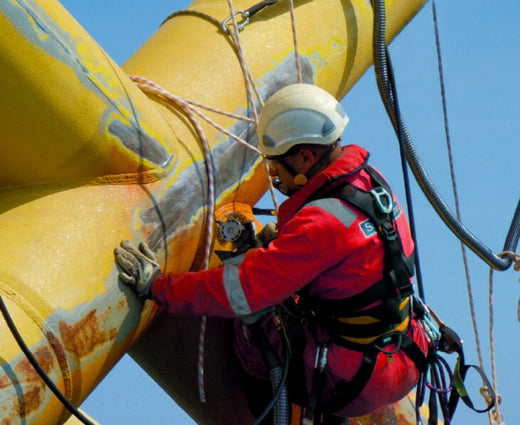
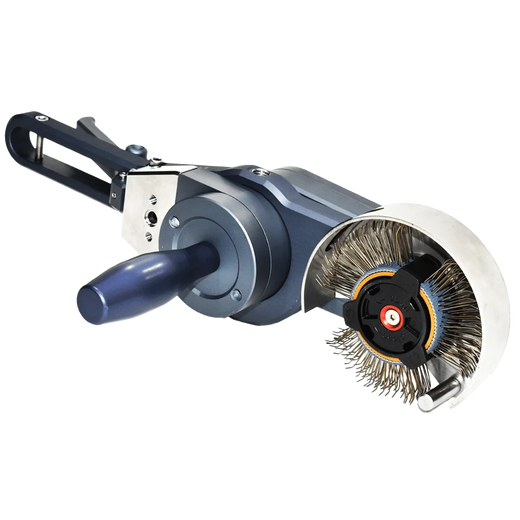
Zinc-rich primers in particular need a correct anchor profile to develop their mechanical and galvanic bond, and even surface-tolerant epoxy mastics last longer on a sound, profiled surface. Where blasting is impractical, impact power tools such as the Bristle Blaster® produce cleanliness comparable to ISO 8501-1 Sa 2½ and a 65–85 µm Rz profile on standard steel in documented tests; results vary with steel grade, rust grade, belt and technique, and acceptance against the coating specification remains the inspector's call. The full preparation sequence, from heavy removal to a verified surface, is described in the MontiPower® Controlled Preparation System; the standards ladder is in the complete guide to surface preparation standards.
Key takeaways
- First split: thermoset (cures chemically, solvent-resistant) vs thermoplastic (dries by evaporation, re-soluble).
- Epoxy for build and chemical resistance; zinc-rich for galvanic protection; polyurethane/acrylic for weathering.
- Alkyds only for mild, non-alkaline service; mastics for tolerant maintenance; silicone for heat.
- Read the data sheet (solids, DFT, pot life, recoat window, cure, surface-prep requirement) before the job.
- Every family depends on a clean, correctly profiled surface; chemistry sets the ceiling, preparation sets the floor.
Frequently asked questions
What is the difference between thermoset and thermoplastic coatings?
Thermosets cure by an irreversible chemical reaction and become insoluble in solvents; epoxies, polyurethanes and zinc silicates are examples. Thermoplastics dry by solvent or water evaporation and remain re-soluble; acrylics, vinyls and chlorinated rubbers are examples. Thermosets generally give better chemical and solvent resistance, thermoplastics faster drying and easier recoating.
Why do zinc-rich primers need such good surface preparation?
Their protection is galvanic: zinc particles must be in electrical contact with clean steel to corrode sacrificially in its place. Contamination or an inadequate profile breaks that contact and the bond. Inorganic zinc primers are usually specified over near-white blast-cleaned steel (SSPC-SP 10 / Sa 2½) or a surface of comparable cleanliness and profile.
Why is epoxy almost always topcoated outdoors?
Epoxies have excellent adhesion and chemical resistance but chalk and lose gloss under UV. A polyurethane or acrylic topcoat protects the epoxy intermediate and carries the colour, weathering and gloss the finished system needs. Chalking is mainly cosmetic, but it erodes the film over time and complicates recoating.
What does 'solids by volume' tell me?
It is the percentage of the wet coating that remains as dry film once the solvents evaporate. Higher volume solids means more dry film per litre, better coverage and usually better value. It is the number to compare between products, not the price per tin, together with the recommended dry film thickness.
Which generic coating should I use for maintenance over imperfect steel?
Aluminium epoxy mastics are the usual choice: they tolerate hand- or power-tool-cleaned steel and many sound existing coatings, build high film thickness and are low in VOC. They still last longest on a clean, profiled surface, so remove loose rust, oil and soluble salts and test adhesion on a trial patch first.
Sources
- Corrosion Alliance, Generic Types of Atmospheric Coatings. corrosionalliance.com
- Corrosion Alliance, Thermoset vs. Thermoplastic Coatings. corrosionalliance.com
- K. Stanczyk, KTA-Tator, Inorganic vs. Organic Zinc Rich Primers: What’s the Difference? (2017). kta.com
- Teknos, Coating system sheet C4.08 Low, zinc-rich (ISO 12944). teknos.com
- MontiPower, Bristle Blaster® technical data sheets and product pages (cleanliness comparable to ISO 8501-1 Sa 2½ / Sa 3; 65–85 µm Rz on API 5L steel in documented tests).